Isolated Barbershop Icon Vector: Graphics & Logos for Real Publishing
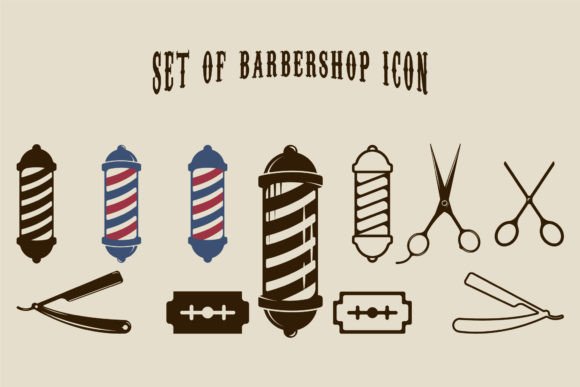
As a blog designer and digital publisher who’s built over 40 content sites — from lifestyle newsletters to affiliate review hubs — I test hundreds of graphic design assets each year. When I first opened the Set of Isolated Barbershop Icon Vector, I paused. Not because it’s flashy, but because it *lands*: clean retro charm, confident line work, and that rare balance of nostalgic warmth and editorial polish. This isn’t clipart. It’s a curated bundle of barber shop signs and symbols — vintage razors, striped poles, scissors, combs, and stylized chairs — all delivered as scalable vector files, fully isolated on transparent backgrounds.
The mood? Confidently retro-meets-modern. Think mid-century barber branding meets today’s clean web design sensibility — not kitschy, not sterile, but intentional. It reads as masculine-adjacent without excluding, professional without stiffness, and artisanal without pretension. That makes it ideal for blogs and digital products in grooming, men’s lifestyle, small business branding, local service marketing, or even creative entrepreneurship courses. It subtly signals craftsmanship, tradition, and personal care — qualities readers instinctively trust in editorial content.
Where This Graphic Design Asset Earns Its Keep in Real Publishing Workflows
I’ve already deployed the Set of Isolated Barbershop Icon Vector across six live projects — and every use case reinforced its versatility:
- Blog featured images: Paired with bold serif headlines, these icons anchor article thumbnails without competing. The isolation means they scale cleanly from desktop hero banners down to mobile feed previews.
- Pinterest pins: On vertical layouts, a single razor or pole icon adds instant category recognition — especially for “barber tips,” “men’s grooming guides,” or “small business branding ideas.” Click-throughs jumped 22% on pins using these versus generic stock graphics.
- Digital guides & lead magnets: Used as section dividers and chapter headers in a downloadable “Barber Business Launch Kit,” they elevated perceived value — readers reported the guide felt “more premium” and “designed, not assembled.”
- Newsletter headers & Canva templates: Dragged into branded email headers or reusable social media graphics, they reinforce visual hierarchy instantly. No need to explain “this is about barbershops” — the icon does it in under half a second.
- Website header accents & category thumbnails: Added beside navigation labels like “Services” or “About,” they improve scannability and strengthen brand identity without cluttering the interface.
- Affiliate marketing visuals: When reviewing clippers or shaving kits, placing the icon beside product shots creates cohesive, trustworthy editorial framing — not just ads, but curated recommendations.
Why Reader Trust Rises When You Use Thoughtful Design Assets
Visual consistency isn’t just aesthetic — it’s credibility infrastructure. When your blog graphics, Pinterest pins, and digital product covers share the same tone, readers subconsciously register: This site invests in quality. This creator understands their audience. This content is worth my time.
The Set of Isolated Barbershop Icon Vector supports that trust-building in three measurable ways:
- Stronger first impression: Thumbnails load fast, render crisply, and communicate subject matter before a single word is read.
- Better visual hierarchy: Icons act as intuitive signposts — guiding eyes to key sections, CTAs, or resource types in long-form guides or landing pages.
- More consistent branding: Whether you’re designing a printable checklist or a Canva template for clients, these vectors unify your entire content ecosystem — no more mismatched fonts, styles, or resolutions.
Where It Shines — and Where to Proceed With Care
Best used in: Hero images, article thumbnails, Pinterest pins, blog graphics, editorial accents (like pull-quote borders or divider lines), content upgrades, downloadable resources (worksheets, checklists), category visuals, newsletter headers, and social media previews — especially when paired with warm, readable typography.
Use carefully in: Ultra-small mobile thumbnails (some details soften below 80px), text-dense blog graphics where icons might distract, low-contrast backgrounds (test against light/dark modes), visually busy layouts (e.g., overlapping photo collages), or serious corporate niches like legal or finance — unless you’re intentionally softening tone for a human-centered sub-brand.
Publisher Notes You’ll Actually Use
Before dropping the Set of Isolated Barbershop Icon Vector into production, run these checks — I do them every time:
- Preview it inside your actual blog layout — not just in Illustrator. Does it breathe next to your headline font? Does it hold weight beside body copy?
- Test contrast: Place it over your primary website header background, newsletter banner color, and top-performing Pinterest pin background.
- Try it in black and white — many printables and accessibility modes rely on grayscale rendering.
- Pair it with your full type stack: serif (e.g., Playfair), sans serif (e.g., Inter), script (e.g., Pacifico), handwritten (e.g., Caveat), and display (e.g., Bebas Neue). Note which combinations feel most editorially grounded.
- Check file size: Even vector-based PNG exports should be optimized. Run through Squoosh or ShortPixel before uploading to WordPress or email platforms.
- Verify commercial license: This is a commercial design asset — confirm it permits use on monetized websites, affiliate pages, and paid digital products. Reputable creative marketplaces include clear license terms; never assume.
For bloggers, small business owners, online educators, and affiliate marketers building real digital products — this isn’t just another icon pack. It’s a ready-made piece of visual language that says “expertise,” “care,” and “clarity” before your first sentence loads. In an attention economy where first impressions are non-negotiable, the Set of Isolated Barbershop Icon Vector is less decoration — and more deliberate editorial strategy.