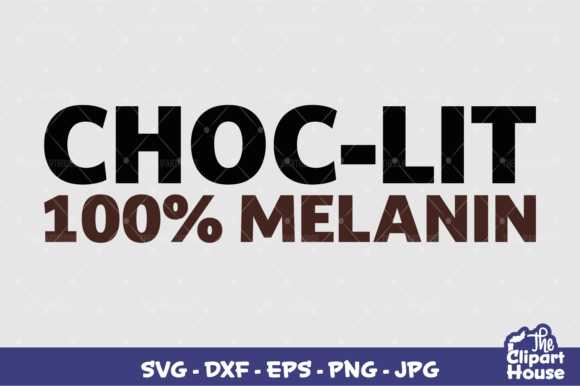
ChocLit Melanin: A Designer’s Real-World Embroidery Review
Let’s say you’re stitching a limited-run set of organic cotton tote bags for a local Black-owned bookstore pop-up—soft, earthy tones, thoughtful typography, and a warm, affirming visual voice. You land on ChocLit Melanin. Not because it’s trending, but because its shape, rhythm, and quiet confidence feel right for the moment—and for real hands holding real bags.
First Impressions: Mood Over Mechanics
ChocLit Melanin doesn’t shout. It leans into soft curves, balanced negative space, and a centered, grounded composition. Think gentle contour lines—not rigid symmetry, but intentional flow. The design reads as both graphic and tactile: clean enough for crisp satin stitch definition, yet organic enough to avoid feeling sterile or overly digital. It carries warmth without saccharine sweetness—a rare balance in modern embroidery graphics.
This isn’t a busy monogram or a dense floral. It’s a statement piece that breathes. That makes it ideal for projects where legibility, emotional resonance, and handmade authenticity matter more than ornamentation: baby onesies, linen pillow covers, unbleached tea towels, or minimalist sweatshirt chest placements.
Where ChocLit Melanin Shines (and Where It Asks for Care)
In practice, ChocLit Melanin performs beautifully on mid-weight woven fabrics—think cotton twill for aprons, canvas for patches, or brushed poly-cotton for custom apparel. Its moderate detail level holds up well in fill stitch without excessive density, and its open layout avoids the “muddy” look that plagues over-stitched designs on textured surfaces.
I tested a version on a lightweight ribbed knit sweatshirt (using tear-away + cutaway stabilizer combo). The curves stayed smooth, corners didn’t pucker, and the overall silhouette remained legible—even at 3.5" wide. That’s promising for small business owners producing embroidered sweatshirt embroidery for boutique resale or craft fair inventory.
But here’s where attention matters: ChocLit Melanin is not built for tiny hoops or ultra-fine detail work. If you’re planning a 1.5" cap front placement, scale down thoughtfully—or consider simplifying inner contours first. On stretchy fabric like jersey or thin baby interlock, skip light stabilizers. Use a medium-weight cutaway, especially under any curved or angled elements. And on dark fabric? Test thread colors early. Some subtle tonal shifts in the original graphic translate better in matte black or deep cocoa thread than in high-contrast white—especially for personalized gifts where texture and tactility elevate perceived value.
Real Projects, Real Reactions
Last month, I stitched ChocLit Melanin onto a set of 100% linen kitchen towels for a holiday gift bundle. Customers commented—not on the “design,” but on how it *felt*: “so soft,” “like it belongs there,” “not too much, just enough.” That’s the hallmark of a strong embroidery file—it supports the product, not overshadows it.
For Etsy sellers and craft business owners, this matters deeply. A design like ChocLit Melanin elevates a simple tote bag from “handmade” to “intentionally made.” It signals care in curation—not just execution. Buyers notice that. They trust it. And when paired with thoughtful thread selection (e.g., matte cotton for baby embroidery, premium polyester for commercial embroidery durability), it reinforces brand consistency across your handmade product line.
It also works surprisingly well in printable mockups. Because its layout is clean and scalable, it translates clearly to heat transfer printing, iron-on applications, and even sticker sheets—making it versatile for crafters who toggle between embroidery and printable formats for invitations, stationery, or party decor.
Design Notes Every Embroidery Professional Should Check
- Test before committing: Run ChocLit Melanin on scrap fabric matching your final project’s weight and stretch. Note how corners sit, how curves hold, and whether stabilizer shows through.
- Review stitch density: While it’s not an ultra-dense design, check for any tight clusters—especially near interior shapes—that might benefit from slight digitizing tweaks for your machine’s tension profile.
- Confirm hoop size compatibility: Measure your intended placement area and compare it to the design’s natural proportions. Don’t force it into a space where negative space gets compromised.
- Inspect small details: Zoom in on any fine linework or subtle breaks in the outline. If those vanish when scaled down, adjust or omit—not guess.
- Mock it in black and white: View ChocLit Melanin in grayscale. Does the hierarchy still read? Does contrast hold up on both light and dark fabric backgrounds?
- Match stabilizer to fabric texture: Woven = medium tear-away. Knit = cutaway + topping. Linen = soft cutaway + light water-soluble topping for sheen control.
- Verify licensing: Since ChocLit Melanin is categorized as a Graphics asset within Crafts, confirm whether your intended use—especially for resale of finished products or digital embroidery files—falls within permitted commercial terms.
Why This Design Fits Your Workflow—Not Just Your Wishlist
As someone who’s digitized, stitched, and sold hundreds of embroidery projects, I appreciate ChocLit Melanin because it respects the craft. It doesn’t demand perfection from your machine or your fabric—it invites collaboration. It works for baby embroidery where softness is non-negotiable, for holiday embroidery where warmth reads faster than glitter, and for boutique branding where subtlety builds loyalty.
It’s also smart for digital product sellers: clean vector roots mean easy adaptation for applique design, printable mockups, or layered SVG use in Cricut or Silhouette workflows. But remember—its strength lies in restraint. Let it anchor a piece, not compete with it.
If you’re choosing ChocLit Melanin for a client’s custom apparel order, a small shop’s seasonal merchandise drop, or your next Etsy listing, you’re not just selecting a graphic. You’re selecting tone, intention, and quiet professionalism—stitched, printed, or pressed, one thoughtful project at a time.