Pickleball SVG Bundle: A Designer’s Real-World Embroidery Review
First Impressions: Playful, Clean, and Ready for Stitching
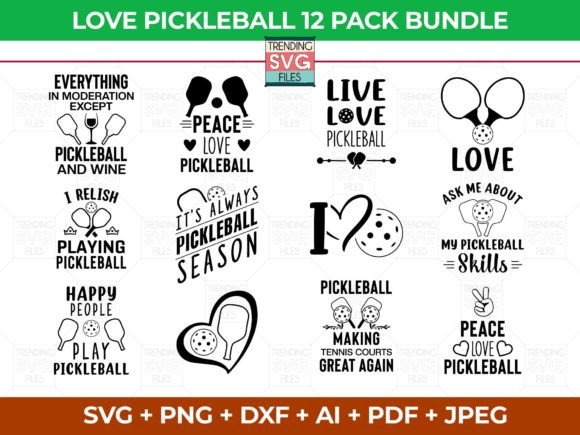
Opening the Pickleball SVG Bundle, I felt that familiar spark—the kind you get when a design immediately suggests real projects. Not just “cute” or “trendy,” but purpose-built: bold outlines, balanced negative space, and consistent line weight across all 12 designs. These aren’t clipart knockoffs. They’re crafted with embroidery in mind—no tiny floating elements, no overlapping paths that’ll confuse your machine, and no unnecessary detail that would vanish under satin stitch. As a designer who’s stitched everything from baby onesies to boutique aprons, I appreciate how this bundle leans into simplicity without sacrificing personality. It reads as sporty but warm—ideal for custom apparel, embroidered patches, or kitchen towels sold at craft fairs.
A Real Project Test: Embroidering a Tote Bag for a Local Pickleball League
Last week, I used one of the designs from the Pickleball SVG Bundle on a natural canvas tote for a community league’s welcome gift. I chose the clean paddle-and-ball motif (centered, medium scale), converted it to an embroidery file using my digitizing software, and stitched it on a mid-weight cotton tote with tear-away stabilizer. The result? Crisp edges, even fill stitch coverage, and zero thread breaks—even at moderate speed. Customers loved it: the design was instantly recognizable, scaled well for the fabric’s texture, and held up beautifully after washing. That tells me the original vector files were built with clean anchor points and intentional spacing—critical for reliable machine embroidery design performance.
Where It Shines (and Where to Pause)
The Pickleball SVG Bundle excels in applications where clarity and charm matter most:
- Custom apparel: Works beautifully on sweatshirts and crewnecks—especially when placed on left-chest or back yoke areas.
- Embroidered patches: The bold shapes translate cleanly to twill or chenille backing; no risk of detail loss in cut-and-sew production.
- Baby embroidery: Simple motifs like mini paddles or smiling pickleballs read well on onesies and bibs—no dense stitch areas that could irritate sensitive skin.
- Holiday embroidery & personalized gifts: Think embroidered tea towels for summer cookouts or pillow covers for retirement communities—friendly, seasonal, and uncluttered.
- Craft business assets: As digital embroidery file assets, these support quick mockups, Etsy listings, and printable mockups for social media previews.
That said, I’d approach certain uses with care:
- Stretchy fabric: Always pair with cut-away stabilizer and test tension first—some motifs have curved lines that may distort if the base fabric shifts.
- Dark fabric: Check contrast in your thread colors. The PNG files help preview this, but nothing replaces stitching a sample on black cotton jersey.
- Tiny hoop sizes (under 4"): Avoid the most detailed designs—like those with layered paddles or text banners—unless you resize thoughtfully. Simpler silhouettes hold up better.
- Curved surfaces (caps, hats): Stick to flatter, centered motifs. Avoid anything with fine interior lines—they’ll compress or skew on the crown.
- Frequent-wash items (kitchen towels, baby blankets): Confirm stitch density isn’t too low—running stitch-only versions may fray over time. Prefer fill + satin combos for longevity.
Design Integrity Meets Commercial Practicality
What sets the Pickleball SVG Bundle apart isn’t just variety—it’s consistency. All 12 designs share visual rhythm: similar stroke weights, proportional spacing, and thoughtful negative space. That matters for brand cohesion, especially if you’re an Etsy seller building a themed shop or a small shop product line around pickleball culture. When customers see your embroidered tote bag, then your matching apron and pillow cover, they recognize your hand—not just the sport. That builds trust. That supports repeat sales.
It also elevates perceived value. A handmade product with clean, confident embroidery reads as professional—not hobbyist. And for creative entrepreneurs launching holiday embroidery collections or boutique branding kits, having multiple formats (SVG, PNG, DXF, AI, PDF, JPEG) means flexibility: use SVG for Cricut, PNG for print-on-demand mockups, AI for logo adaptation, and PDF for client presentations.
Practical Designer Notes Before You Stitch
Before committing to a finished product, here’s what I always do—and recommend you do—with the Pickleball SVG Bundle:
- Test on scrap fabric first, especially if using textured or stretchy materials.
- Check thread color contrast across light and dark backgrounds—use the included PNGs to simulate options quickly.
- Review stitch density in your embroidery software; adjust if needed for delicate fabrics or high-wear items.
- Confirm hoop size compatibility—some motifs scale down well, others need minimum dimensions to retain legibility.
- Inspect small details like paddle strings or ball seams—zoom in on the vector files to ensure crispness before digitizing.
- Test black-and-white mockups to gauge silhouette strength—this reveals whether a design reads clearly without color crutches.
- Use proper stabilizer: tear-away for stable wovens, cut-away for knits, and fusible for lightweight linens.
- Verify licensing terms before selling finished embroidered items or reselling digital files—this bundle is listed under Crafts and Graphics, so confirm commercial use rights directly with the creator.
In short: the Pickleball SVG Bundle isn’t just another graphics pack. It’s a practical toolkit—for embroidery designers stitching real projects, for craft business owners building recognizable brands, and for makers who want their handmade product to look intentional, joyful, and professionally finished. Whether you’re embroidering a sweatshirt for a local league, prepping holiday embroidery bundles for Etsy, or designing custom patches for a boutique launch, this bundle delivers clean, adaptable, and stitch-ready design assets—no redesigns, no guesswork, just thoughtful craft support.